Slay the Spire: A Wholly Biased Look at a Gaming Masterpiece
Hello again!
If you read my introductory post, you’ll know that I’m going to be talking about Slay the Spire today. Spire is a good place for beginners to start looking at roguelike deck builders for a few reasons:
- It's what I consider to be the origin point of this subgenre of games
- Most of the game mechanics in Spire show up in later games (Read: Everyone else copied their homework)
- It's one of the best designed games I've ever played
Alright, there’s an unfathomable number of stairs to climb in this spire, so we better get started now.

Image credit: Mega Crit Games
Ground Floor – Summary of a Spire
Slay the Spire was released in 2019 and has, every few months, ruined my life. The game is infinitely replayable, which isn’t the same as there being no win condition. There is one, just get used to not getting there.
To win Slay the Spire, you have to climb the titular spire and titularly slay its literal beating heart. To do that, you construct a deck of cards that represent actions your character makes in combat. Attack, block, shoot lighting, all the normal stuff everyone can do.
The tricky part is that your deck of cards has to be powerful enough to crush your enemies, but you don’t know who exactly your enemies will be, or which cards you’ll find scattered on the ground. The game is a series of small decisions with big impacts, and sometimes all your choices are bad.

I'm not building a shiv deck, game! Bah!
You have to make the best of what the game gives you. Sometimes, you’ll have built a deck of low-cost cards with the goal of overwhelming enemies with blows before they even get a chance to kill you. Then, you reach Act 3 and see the Time Eater is the boss and you scramble to find some way, any way, to pivot your build so you don’t get beaten to death by a slug with a pocket watch.

What I’m trying to say is that the developers of Slay the Spire, Mega Crit Games, are evil. They designed cards in such a way to encourage you to build certain synergistic strategies, and then they went and designed enemies to counter those specific strategies.
I love it so much.
Middle Floors – Mechanics of a Spire
There are four playable characters, each with different pools of cards and unique mechanics. They roughly fall into some classic fantasy RPG tropes:
- The Ironclad, a fighter with immense strength, defense, and a pact with a demon
- The Silent, a nimble assassin who plays dirty with hidden knives and poison
- The Defect, a robot wizard who manipulates elemental orbs with bursts of energy
- The Watcher, a monk who overwhelms foes with flurries of blows and rapid stance swapping

Image credit: James-Christopher Fauvelle
The gameplay is split into player turns and enemy turns. At the start of the player turn, 5 cards are drawn from your deck. Each card has an energy cost associated with it, and you only have so much energy each turn. Energy does not carry over to your next turn, so you’re encouraged to play to 0 to maximize damage or defense.
You'll also occasionally find potions, which are single-use but powerful items you can use at any point during your turn.
Once you end your turn, your remaining cards are discarded. Then the enemies get to stab you.

The Book of Stabbing will never not stab you.
Randomly getting stabbed to death is never fun, so the Spire devs made the brilliant design decision to always show enemy intents. You know what action they’re going to take and can play your cards with their action in mind. The intent mechanic transforms each fight from a mindless beatdown into a puzzle where you have to carefully consider several factors:
- Is offense or defense more important this turn?
- How risky can I play?
- How likely am I to draw an important card when I need it?
It’s a brilliant balancing act of mechanics that makes every turn engaging, and when you perfectly execute your strategy, you feel like the smartest genius in the world.

Enemy encounters make up the meatiest part of the game, but outside of combat there’s plenty of engaging decisions to make. Which path will you take? Which cards will you pick? Additionally, there’s a number of random Events that can have a dramatic impact on your game plan. Many of them are designed so there’s a risk and a reward involved, like when you get offered to join the vampire cult.

Besides cards, there are also relics you can find in events, shops, or after winning against an elite enemy. In the screen shots I've included, you'll see them lined up in a row towards the top of the screen. Relics range from small beneficial effects to game altering win conditions.
There is so much variety in cards, relics, events, and enemies that listing it all is well beyond the scope of this post. Plus, I’d hate to spoil all the secrets the Spire has to offer.
Top Floor – Consumed by a Spire
Slay the Spire is one of my favorite video games. I’ve put 100s of hours into it over the years, and going back to play it for this little article has been a blast. On Steam, it’s only $24.99 (without a sale!), and it’s well worth each one of the hard-earned American dollars I paid for it.
Let me know in the comments if you decide to try it! I’m not great at the game, but I’ve played it enough that I can offer some more specific beginner’s tips if you’d like them.
Oh! Also, there’s a sequel that should be coming out sometime next year. You should check out the trailer they released and see what you think. I am, of course, beyond excited to see what cruel nightmares they have in store for us this time.
What’s next? – Tumbling off the Spire
The next post I make is going to be the first instance of what I’m tentatively calling the Biweekly Blunder Run, where I record some gameplay of me flailing about and then write about my experiences in the run. What decisions I made and why, what inevitably went wrong, what made the run unique, that kind of stuff.
There are so many games I’d like to try for this, but I’ve narrowed it down to three that I’d love to hear your opinions on.

Image credit: Pengonauts
StarVaders is a beautiful game that’s inspired by mecha anime and the classic arcade game Space Invaders. This one is here because the art, music and tactical gameplay make it fun to watch.

Image credit: Shiny Shoe Games
Monster Train 2 is a unique take on this genre that incorporates some wave defense elements. This one is here because it’ll showcase how varied this genre can be and also because it’s another favorite of mine.
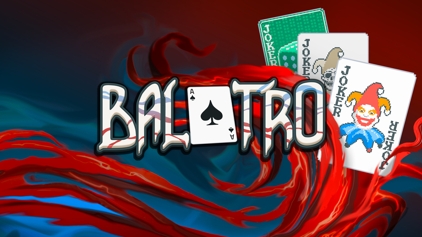
Balatro is a roguelike deck builder that uses the stylings of poker for its phenomenal gameplay. This one’s here for its popularity and accessibility for people new to the genre.
I’m aiming to have the Biweekly Blunder Run posted sometime on Wednesday, so let me know your opinions soon, please! If there’s no strong consensus, I know which one I’m going to pick, but I’d love to hear your thoughts.


Alright, alright, I'll give Slay the Spire another try.
ReplyDeleteSeriously, though, I think I have this game in my Steam library with 0.1 hours on it. I don't know why I never gave it a fair shake -- I think you've inspired me to do so.
What are some absolute simpleton basics I should know about the deck building before I dive in between Hades II runs?
1. A good rule of thumb for all the characters is to look for replacements for your base cards. Strikes and Defends are good early, but quickly fall off. Hitting shops to remove Strike/Defend cards is a great way to make your deck more consistent and powerful.
Delete2. Don't avoid Elite encounters! They drop relics that interact with your deck in interesting and powerful ways.
3. When you hit a campsite, only heal if you're on extremely low health. In general, upgrading cards to kill enemies faster is a better way to save health than healing.
4. When you're still learning the game, just pick anything that looks like fun while you learn how mechanics interact. As you learn the game, you'll start to recognize which cards open build opportunities. (Ex: Spot Weakness+Heavy Blade on Ironclad or Infinite Blades+Cloak and Dagger on Silent)
If you want some more character specific tips and don't mind "netdecking", so to speak, the Slay the Spire Wiki is a great resource. The Math Nerds have written out some great guides on deck archetypes and what the best cards are to make powerful decks with them.
This post was such a fun read. You did a great job mixing humor with a clear explanation of the mechanics, especially for people who might not know much about Slay the Spire. I liked how you broke it down floor by floor I haven’t played Slay the Spire, but after reading this, I’m definitely tempted to try it out. Between the games you listed for your next “Biweekly Blunder Run,” I have certainly had a Balatro phase and then again I probably haven't seen 10% of the entire game, it's so overwhelming to me!
ReplyDeleteThank you for the kind words. Let me know if you do end up trying Slay the Spire!
Delete